
Steel vs timber frames: a builder's comparison
Comparing options · 7 min read · Published
Short answer
Steel frames are made straight by machine and stay straight, are not eaten by termites and do not burn; timber is familiar to every crew and easy to modify on site. Which costs less depends on the design, material prices at the time and how the frame stage is run, so compare real quotes from the same plans.
The short version
| Light gauge steel | Timber | |
|---|---|---|
| Straightness | Machine-cut members; no shrinkage or twist from drying | Can shrink, bow or twist as it dries |
| Termites | Not a food source | Needs termite management and treated or resistant species |
| Fire | Non-combustible | Combustible |
| On-site changes | Planned in the design; changes need care | Easy to cut and modify on site |
| Weight | Light members, panels usually handled by hand | Heavier for comparable members |
| Crew familiarity | Different fixings and tools | Familiar to most crews |
Straight walls and flat ceilings
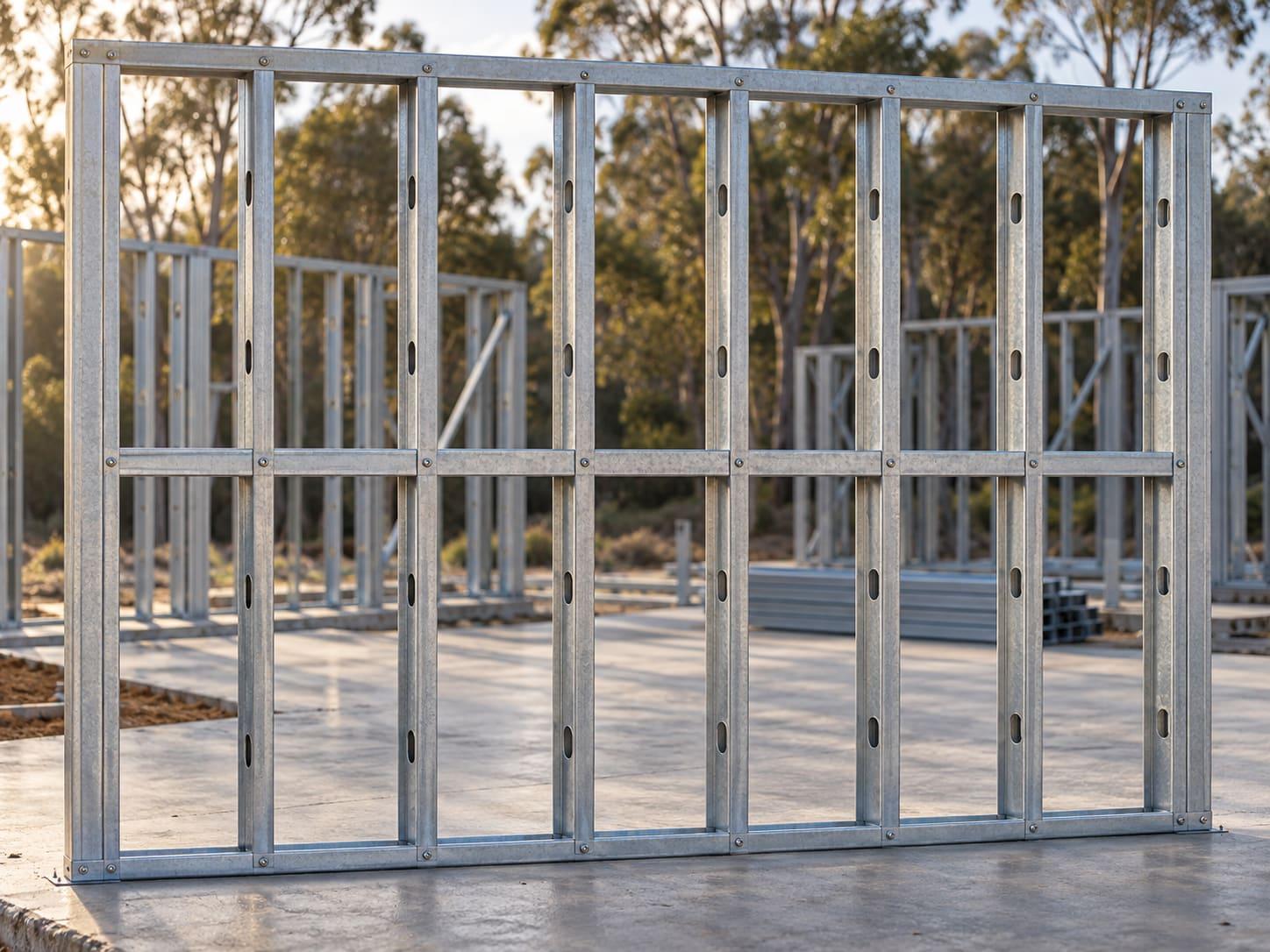
The biggest practical difference is dimensional stability. Steel members are cut to length by machine and don't dry out, so a wall that is straight when it is stood stays straight. That helps with plasterboard, cabinetry and tiling later in the build.
Termites
Steel is not a food source for termites. BlueScope describes frames made from TRUECORE® steel as termite and borer proof. The building as a whole still needs whatever termite management the NCC requires for its other components, so steel framing reduces the risk to the structure rather than removing every termite requirement.
Fire
Steel does not burn, which is one reason steel framing is considered for bushfire-prone land. The bushfire requirements for a building are set by its bushfire attack level and assessed by the certifier; the frame material is one part of that.
Installation
Pre-made steel wall panels and trusses are stood and fixed rather than fabricated on site. Crews used to timber need the right screws and tools and a short adjustment period. The trade-off is flexibility: a timber frame is easy to alter on site, while a steel frame is designed completely before manufacture, so late plan changes cost more.
Cost
Blanket claims that one material is always cheaper are not reliable. Material prices move, and the total cost includes labour, waste, rework and programme time as well as the frame itself. The most useful comparison is two quotes from the same plans, plus a realistic view of how long the frame stage will take your crew with each.
When steel is a strong fit
- Termite-prone areas and owners who want to avoid chemically treated timber
- Designs with long, straight walls, high ceilings or large openings
- Repeated designs in developments
- Bushfire-prone sites, subject to the certifier's assessment
- Builders who want the frame made to the plans off site