
Steel roof trusses vs timber roof trusses
Comparing options · 5 min read · Published
Short answer
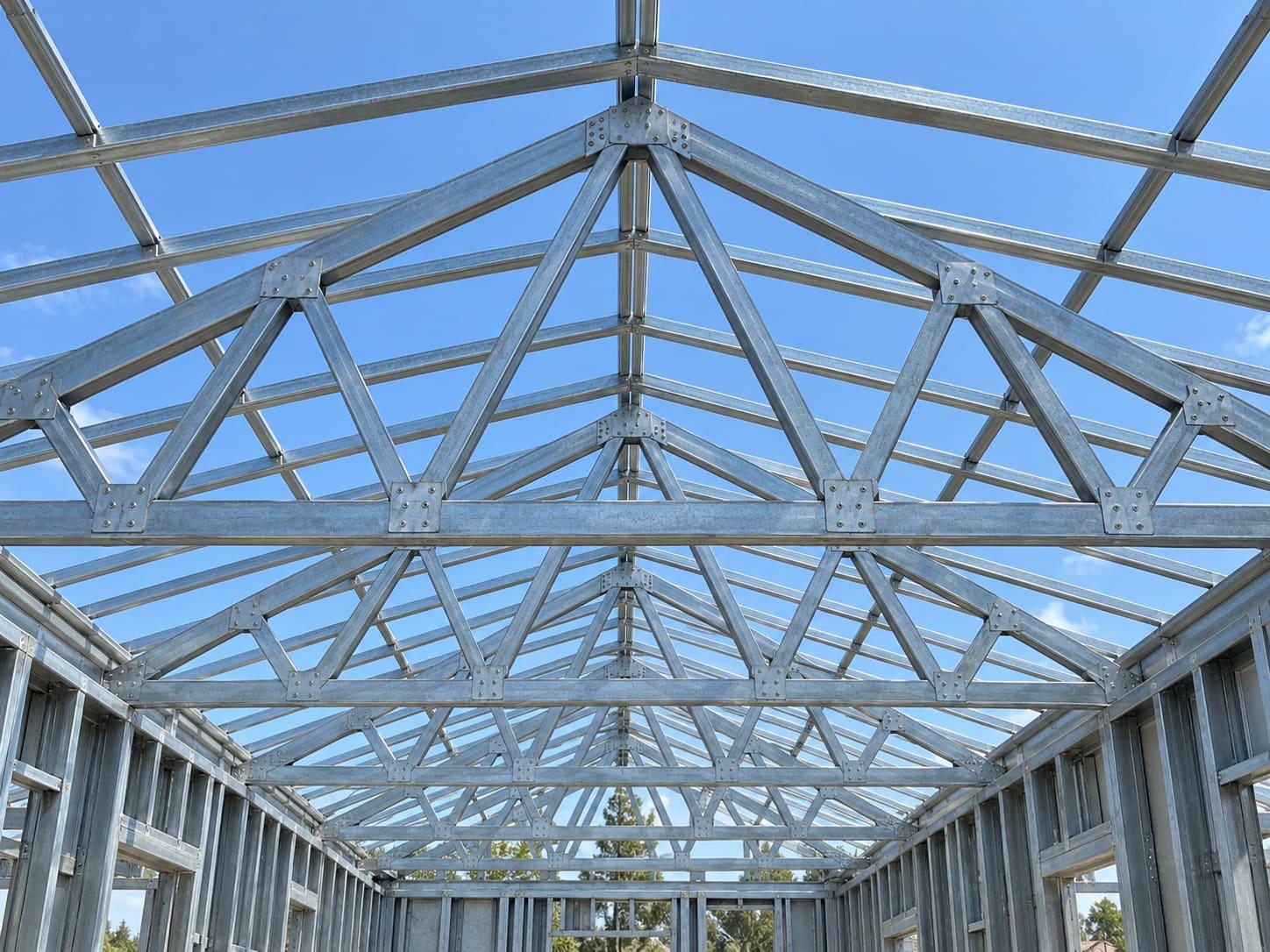
Steel roof trusses are made straight by machine, don't sag, split or warp as timber can, aren't eaten by termites and are lighter to handle at height. Both steel and timber trusses are engineered for the roof's loads and wind classification; the right choice depends on the design, the rest of the frame and the quotes from your plans.
Stability over time
Timber trusses can move as the timber dries or gets wet. Steel trusses don't shrink or warp, which helps keep ceilings flat and roof lines straight.
Handling at height
Steel trusses are lighter than comparable timber trusses, which makes them easier to handle and position. Whether that reduces crane time depends on the roof and the site.
Wind
Every roof is designed for the wind classification of its site. Steel trusses can be engineered for high-wind and cyclonic classifications, including Wind Region C on the Queensland coast north of Bundaberg. The connections from truss to wall, and wall to floor, are as important as the truss itself.
What to tell your supplier
- Roof plan and pitch
- Roofing material: metal or tile
- Ceiling type: flat, raked or cathedral
- Anything on the roof: solar panels, air-conditioning, hot water
- Wall framing material
- Wind classification