
Does steel framing rust? Coatings, the coast and site storage
Comparing options · 5 min read · Published
Short answer
Light gauge steel framing is protected by a metallic coating applied to the steel before it is roll-formed. The NCC's steel framing provisions set a minimum coating class of Z275, AZ150 or AM150 for typical conditions inside the building envelope. Frames close to breaking surf, exposed to condensation or outside the envelope need more protection, and frames should be stored dry and off the ground before installation.
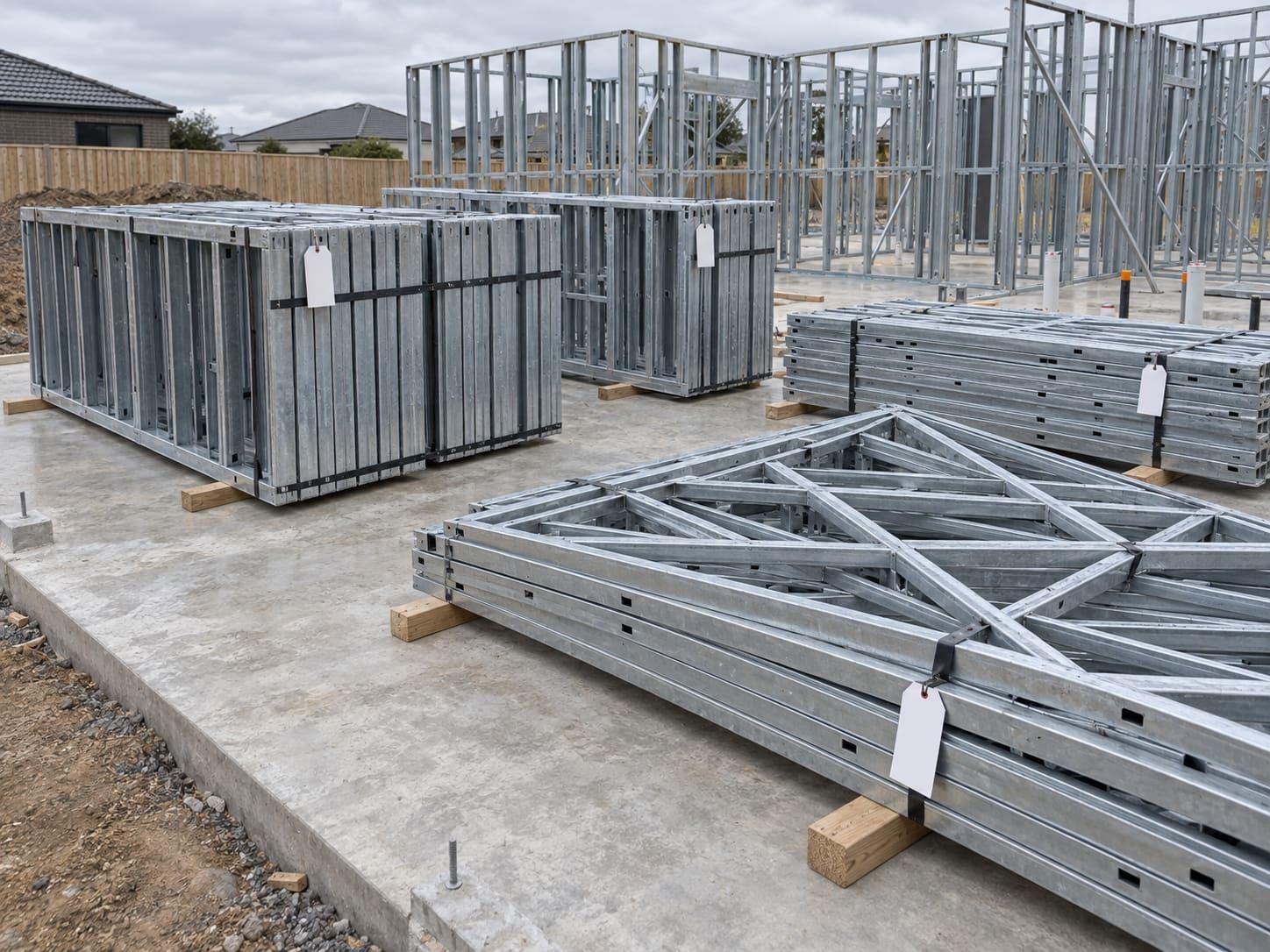
How the coating works
Framing steel is coated with zinc or an aluminium-zinc(-magnesium) alloy at the mill. The number in the coating class is the total coating mass in grams per square metre on both sides: Z275 is 275 g/m² of zinc, AZ150 and AM150 are 150 g/m² of the alloy coatings. TRUECORE® steel is currently supplied with an AM150 coating.
Inside the building envelope
Most of a house frame sits inside the building envelope, protected from the weather by cladding and roofing. That is the condition the minimum coating class is written for.
Near the coast
Salt air accelerates corrosion. Frames on sites close to breaking surf, near salt water, subject to regular condensation, or partly outside the envelope (such as sub-floors and verandahs) need extra protection. The requirement depends on the site, so tell your frame supplier how far the site is from the water and which parts of the frame are exposed.
Details that matter on site
- Store frames off the ground, on gluts, and covered so water can't pool in the packs
- Keep dissimilar metals (for example copper pipes) from direct contact with the frame
- Use fasteners suited to the steel and the exposure
- Avoid mortar or wet materials bridging onto frames
- Repair any coating damage as the frame manufacturer recommends